Jackhammers

Jackhammers

Blue balloons welcomed us home; it was Saturday. Millie and Wells both had special stuffed animals to give to their baby brother. A nurse at the hospital gave us stickers, “big sister” and “big brother”; they were so proud. They both took turns holding Crosby and kissed him on his head. I felt so good to be home.

To make sure Crosby was eating enough through the night, we supplemented with the soy-based formula from the hospital, in addition to my breast milk. He was lethargic from being jaundiced and didn’t want to wake to eat. My milk had finally come in; I was pumping at least 3oz of white, thin milk every session. We made an appointment with the pediatrician for Monday morning for a weight check.

We were unable to book Crosby’s appointment with our regular pediatrician because her schedule was full so we had to see another doctor in the practice whom we didn’t know. When we were checking Crosby into his appointment, the receptionist asked if we had been exposed to Covid in the last ten days. I was honest and told her that I was currently Covid positive (I should’ve lied). We waited a long time before the doctor’s assistant came out to inform us that I could not go back into the room with Crosby; I was told that I could go to my car and they would put me on speaker phone for the visit. Oh heck no. I said, “It has been five days since I tested positive for Covid. If I wasn’t on maternity leave, I’d be expected to go back to work today and teach 500 children. Why can’t I be in the room, masked, with my newborn?” The aide came back after speaking with the doctor and said I was allowed to go back into the room with Crosby.

The medical assistant stretched Crosby out on the table and measured him an inch shorter than what he was measured at the hospital. He shrunk? My emotions were already heightened from the debacle in the waiting room and now I definitely had an attitude. We took off Crosby’s clothes to weigh him and found that he had lost more weight since leaving the hospital. How? I couldn’t believe it. I felt so defeated. The doctor came in and immediately told us that we needed to take Crosby to Nationwide Children’s Hospital to run some tests because he was concerned that Crosby could have brain damage from the lack of nutrition. I got defensive, “My milk just came in. I’m going to take him home and feed him even more. We do not need to go to the hospital for testing.” The doctor told me that if I did not take Crosby to the hospital that he would call Children Services. With that, I started to cry, like ugly, gasping, desperate cry. The doctor asked to examine Crosby. He took one look at his umbilical cord and said, “You’re not only going to the hospital for his weight loss but I am calling the ID unit, Crosby has an infected umbilical cord.”

Omphalitis is an infection of the umbilicus and/or surrounding tissues, occurring primarily in the neonatal period. It is a true medical emergency that can rapidly progress to systemic infection and death, with an estimated mortality rate between 7 and 15 percent.

The doctor left the room to call the hospital to let them know to prepare a room. I was an emotional wreck; how did this happen? Chris and I both noticed that Crosby’s cord site looked different than Millie’s and Wells’ did, but we didn’t know it was from an infection. We felt like failures for not realizing something was wrong. Thankfully, while the doctor was away, our regular pediatrician came in to see us. She reassured me that I was doing everything right in regard to breastfeeding. She told us that if weight loss was the only issue, she’d send us home but she looked at his umbilical cord and agreed that we needed to get it looked at by the infectious disease doctors at the hospital. She explained that the umbilical cord is a direct portal to his insides and that we needed to treat the infection, quickly.

We rushed home and I packed a bag for me and Crosby. I had just cleaned out my hospital bags. I never expected to be packing them up again. When we checked in at the hospital, the receptionist gave Crosby a toucan chime-toy to hang on his car seat. It was a far walk to the infectious disease unit – probably too long for someone who had just given birth days before. Once we were in our room, a nurse came in and took vitals from Crosby. A resident doctor took pictures of Crosby’s umbilical cord site. It was decided that Crosby would be put on antibiotics for a possible infection. If the redness and swelling of the site went down, we’d know that the medicine was doing it’s job. We were warned that if Crosby were to have a drastic fluctuation in body temperature, they would have to perform a spinal tap. I prayed to God that a spinal tap would not be necessary.

Two nurses came to administer Crosby’s IV. They couldn’t find a vein in his little arm. It felt like an eternity that I sat and listened to my 5lb baby boy scream. Tears soaked my face mask. The blood they eventually were able to draw, clotted. I came up out of my chair. I asked, “How?” The nurse said, “It happens.” and continued to reassure the younger nurse that she was doing a good job. I said, “Doing a good job is keeping the blood viable from my son. You should be moving it!” When they were finally done taking multiple vials of blood, they capped the IV and swaddled him tight so that he couldn’t pull it out.

My face was so swollen from crying and Crosby was exhausted from crying. It was getting late and Chris and I decided that he would go home for the night to be with Millie and Wells. Chris helped me figure out how to order dinner. I set up my “bed” on the squeaky recliner chair next to Crosby’s metal crib. Chris didn’t want to leave me and Crosby. He said that leaving us in the hospital was the hardest thing he’s ever had to do.

I was trying to breastfeed but feeling so self conscious about how much I was getting so I was also pumping (which was not coming easily with the stress). I was asked to label my bottles and call the nurse anytime I pumped or needed the milk from the fridge. Every diaper that came off Crosby had to be weighed. We went through three swaddles that night; he peed every time I’d change his diaper. Between diaper changes, feeds, IV antibiotics rounds, and vital checks, I did not get any sleep. Around 3 am, Crosby felt cold to the touch. I frantically called the nurse and she checked his temp, which was normal, praise God. They found Crosby a baby hat and I watched the Elvis movie.

At 7am, the jack hammering started. Construction was taking place below our room. I couldn’t have slept if I wanted to. Chris came back just in time to hear from the doctors during their morning rounds. From what they could tell, Crosby’s umbilical site seemed less inflamed. His cultures had not grown. They told us that if he stayed on this trajectory, we could possibly go home at the 24 hour mark. With that good news, I was finally able to catch a few hours of sleep.

At the 24 hour mark, the doctors hadn’t come back in to speak with us. We asked our nurse if going home was still on the table and she told us, no. Every test resulted in Crosby responding well to the antibiotic and we were given no reason other than “further observation” for making us stay another night. I voiced that the hospital wanted us to stay because they could charge our insurance 10k a night for the room (a room with a squeaky chair and construction noise). If we chose not to stay, we’d have to sign a release saying we were leaving against the doctors wishes and in turn, our insurance might not pay for the services we received. We decided to stay for “further observation”.

We FaceTimed with the kids so that they could see Crosby and me. It was devastating telling them we weren’t coming home yet. Then the thoughts of never bringing Crosby home crept in and I couldn’t stop crying. I needed my kids, and sleep, but that I night I wouldn’t have either. Chris left to be with the big kids and I turned on some movie with J-Lo.

I was wearing a pad the length of my arm. My “bed” sheets kept slipping off the back of the second, squeaky chair. I was expected to log all feeds (which was incredibly difficult because once fed, Crosby would sleep on me and I was afraid that moving would wake him). Nurses were in and out of the room every two hours doing vital checks. IV antibiotics were administered every 8 hours which meant a 2AM beep and flush. I should’ve been drinking more water. All this to say, when the lactation consultant showed up in the morning, I was miserable to her. She wanted to weigh Crosby before and after a feeding and I yelled at her to get out. It was his infection that was making him lose weight, not my breast production. I was an emotional wreck and the jack hammering continued through morning rounds.

When the doctor came in, she saw that I was distressed. She was super comforting and reassured me that Crosby was getting better and stronger. She agreed that his swelling was lessening and that he was responding well to the treatment. Chris came in during her examination and we both exhaled when she told us that we would be discharged before noon. A nurse explained to us the schedule of his medicine and how much to give him. She told us that it would be most pleasant for Crosby if we gave him the medicine with him sitting up for 15 minutes. We were instructed to go to the pediatrician the next day for another weight check and exam. Before we left, I gave the nurse our left over meal cards for another family to use during their stay.

The pediatrician told us that because of the trauma to the umbilical cord site, Crosby could have a herniated belly button. If he does, he could need surgery before he turns five to correct it.

I desperately wish I could “re-do” Crosby’s first week in this world. We will never know how Crosby got an infected umbilical cord; could’ve been a nurse, the aide who bathed him, the doctor who circumcised him, even me.
IFAP cont.

IFAP cont.

We found out about my compromised X chromosome when I was already pregnant with our third. We chose not to find out the gender and I prayed it was a girl; a girl who wasn’t a carrier. 9 months later, it’s a boy, Crosby, and he has IFAP.

Two weeks after Crosby was born, Wells had to go under anesthesia to remove his eye tubes (good for nothing) and for the corneal specialist to take a closer look at his eyes. After the procedure, the doctors informed us that there was no corneal scarring and no signs of early glaucoma – huge relief. There was eyelid inflammation and of course, the blockage of oil ducts. His dry eye is chronic; the flourometholone and erythromycin are helping with that. Overall, the ophthalmologist and corneal specialist agree that the treatment plan he’s currently on is definitely the best thing moving forward.

The summer time is the absolute worst for his dry, cracked feet. Flip-flops, chlorine, no socks – it was creating many deep cracks that sometimes bled. The Urea cream that we were prescribed (that we found cheaper on Amazon) wasn’t absorbing into his heels. Thankfully, my in-laws’ neighbor is a doctor and he was headed up to do some research at the Mayo Clinic. He offered to pull some information about IFAP for us which turned out to be incredibly helpful. He brought back a stack of papers – all related to, or resources for IFAP syndrome. I read through case studies that I hadn’t seen before. It was surreal reading about other boys with the exact condition as Wells. Three different children were treated with a medicine, Acitretin (10mg per day) and saw improvement in skin features. I reached out to the dermatologist right away.

The dermatologist said that Acitretin could smooth the rough texture of his skin and help with the cracking on the feet. She did not expect hair growth from the medication (all of the case studies from the Mayo Clinic said nothing helped the Alopecia). She explained that Acitretin is not a medication without side effects (skin drying out, possible growth abnormalities, high liver enzymes). There would be regular monitoring of blood work and x rays to safely have him on the medication.

We learned that Acitretin is usually used in treating psoriasis. Women cannot take this medication because it can cause reproductive issues. We read about people who have used and currently use this medication and weighed out the pros and cons. Wells can stop taking this medicine cold-turkey if we notice any negative side effects, it’s non addictive – it’s a vitamin A derivative, and you can start at a very low dosage and still see results. Some scary cons were lack of growth (already an issue if you have IFAP), chapped (to the point of cracking) lips, it’s only offered in capsulated form, and possible abnormal blood results. After careful consideration, we decided to try Wells on the Acitretin.

Wells’ preliminary blood results came back with elevated triglycerides. The dermatologist called me and asked if we fasted before the blood draw. I was like, “Nope. He ate TimBits.” My bad. Even still, we were given the green light to start the medicine. The Acitretin only came in capsule form so we were encouraged to give it to him by opening the pill and pouring the medicine onto something with high fat intake. We decided on whipped cream. Wells began taking the Acitretin and within two days, his skin felt smoother than it had ever been. He did get a gnarly sore on the corner of his mouth because his lips were so incredibly dry from taking this medication. It hurt him to open his mouth too wide especially when he was eating. We informed the dermatologist and she recommended we try taking the medicine every other day. I noticed that the daily vitamin that we were giving him also vitamin A, 100% of his daily value. We started giving Wells the Acitretin once every three days and the balance was perfect.

Crosby has the sandpaper textured arms and legs. His cheeks aren’t as bad as Wells’ were but they’re rough, too. He has two large, bald patches on the top of his head. His eyes water when we take him outside. His nose constantly runs. Until Crosby’s feet crack to the point of discomfort, he wont see the dermatologist. It’s a waiting game to see how many side effects he’ll have of this awful syndrome.

I was let down at our annual, geneticist appointment. Last year, I requested from the doctors to find us a support group for IFAP (didn’t happen). In fact, the doctor said I was the specialist on IFAP now and I know more about the syndrome than him, the doctor (real reassuring considering I don’t know a whole lot). We were told that the type of Alopecia the boys have is called, Atrichia, a rare, recessive form of alopecia where people are born with hair that falls out and is never replaced. Wells has a patch of hair like this and most of Crosby’s head has no hair. The rosemary oil we’ve been buying and putting on their scalp does no good; the hair loss is irreversible.

Nationwide Children’s hospital hosted a Rare Disease Day on March 1st, that my mother-in-law and I attended for knowledge about participation in research studies for the boys. Organizations like NORD and A Kid Again set up booths to spread awareness of their services. The MC spoke about rare diseases being embodied by the zebra; when you hear hooves, you think horses however, sometimes hooves can mean zebras!

The keynote speaker was a doctor and patient who discovered, and named, a rare disease. They were incredibly transparent about the research/patient experience (no one wants their children to feel like lab rats). We were informed of the website clinicaltrials.gov where we’ve already found studies both active and completed about parts of IFAP. Ichthyosis is really being researched in France.

At the end of the session, the MC asked for everyone in attendance to take a group photo. By chance, the doctor who spoke stood next to me! I asked her, “What should I do if our doctors aren’t looking into research studies for us? I know more about our rare disease than the doctors do.” She explained to me that it’s the doctors who will be able to find the best clinical studies for my boys and that I should reach out to them and let them know that I am interested in research studies even if it’s done by a fellow and not a “famous” doctor. I told her that some research is being done in France for parts of IFAP syndrome to which she said, “Sounds like that could be a nice vacation. I have patients in France. Try to contact the doctor facilitating the protocol and see if they know anyone in the U.S. also doing this research.”

The breakout session we attended was about participation in research studies. It was suggested to contact the pharmaceutical company of the medication the boys are on to see if there’s research studies we can take part in. Researchmatch was another application that was mentioned to connect patients to clinical studies.

I learned that there is a Rare Disease Advisory Counsel that I might try to join when I get some free time (lol free time, what is that?) NCH has a program called “Connecting families” where families who are newly diagnosed can speak with families who have been through it. It would be incredibly rare for someone to have IFAP but I am definitely interested in potentially helping another family facilitate life with a rare disease. There are also rare disease sibling support groups that I could look into later for Millie.

A week after the Rare Disease event, I was informed that our family qualified for, A Kid Again. It’s a nonprofit organization that offers free, monthly events and activities for families dealing with a life-threatening condition. They handle all the expenses and details, so that families can simply enjoy themselves. I was excited that we were given this opportunity but at the same time I felt bad because my sons have poor enough health to qualify. (I gave that to them, that compromised X chromosome.) The kids don’t age out until they’re twenty so we can experience these fun adventures for a while. I know they’ll be something we all look forward to. We will go to our first outing in April!

My Baby, My Genes

My Baby, My Genes

I’ve found that given time, life does not disappoint in writing material.

I hate this post. I hate writing this post.

Wells was born with an interesting hairline on the back of his head. At twelve months, we took him to get his first haircut and the hairdresser said, “He won’t grow hair there.”

At 18 months old, Wells lost his eyebrows. How does one lose their eyebrows? We chalked it up to KP (Keratosis Pilaris) a skin condition that Wells has and I also have, which can block hair follicles.

Wells wasn’t saying words like the pediatrician’s developmental survey suggested. We brought this up to the doctor and she said, “Let’s give it six months and see what happens.”

Wells’ speech did not improve. He was frustrated when trying to communicate and I contacted a state funded program and got him into speech therapy. Problem solved, right?

We saw the pediatrician six more times within a two month period because of Wells’ eyes. He lost all of his eyelashes. He had a “gunk” that no drops or ointment was alleviating. We were worried about his vision.

The pediatrician told me that she was suspicious that Wells’ medical issues could be linked to a genetic disorder or an auto-immune disease. What? Chris and I didn’t have any genetic markers. We don’t have any auto-immune diseases in our family. I was scared and defensive. She explained that he had many issues; his hair, his skin, his eyes, his developmental delay. Every issue could be a stand-alone problem or it could be tied to something more. She promised she would look into it but in the meantime, she recommended an ophthalmologist to take a look at his eyes.

The ophthalmologist was quick to tell us that Wells’ tear ducts must be blocked in his nasal passageway. His tears were backing up and creating excess mucus in his eyes. She could do a surgical procedure to put in temporary tubes to help his tears drain correctly. We asked her if this issue was linked to any other disorder that she knew of and she said, “Not at all. It’ll be fixed in six months time.” We mentioned Wells’ severe eye sensitivity which she thought was being caused by his many eye treatments. She referred us to an ENT before we scheduled the procedure because of his constant nasal drip.

The ENT saw inflamed nasal passageways. He was confident that Wells’ adenoids needed to be removed. As a last ditch effort to stop the drainage, the ENT prescribed Wells a ten day, antibiotic steroid however, when that didn’t work, we scheduled the adenoidectomy. The ENT also referred Wells to an audiologist after I informed him of Wells’ speech delay. Wells passed the hearing test.

Wells did not want to wear the hospital gown for surgery. The best advice I was given was from my best friend, Lindsey who told me to ask for anxiety medicine for Wells before he went into surgery. Once that was in his system, he was loopy and fine with going back to the surgical room. (I was a crying mess.)

The ENT was able to perform the adenoidectomy while Wells was under the anesthesia from his eye tube surgery. The doctor relayed to us that Wells’ adenoids were enlarged and had pockets of puss; we were glad they were removed. The eye doctor informed us that the eye tubes were inserted perfectly and she was able to fully examine his eyes. She explained to us that Wells had blocked oil glands on his eye lids and because of this, his eyes were not making the correct balance of moisture (water, oil, and mucus). She prescribed a steroidal ointment to try to get the inflammation down on his eyelids so that the oil glands could open.

It was difficult for Wells when he came off the anesthesia. He ripped his IV out and blood got everywhere. He cried for a long time. Once he started drinking, the nurses said we could take him home. I got him a whale balloon from the gift shop that came off it’s string in the parking garage. Chris got on top of the Jeep to rescue it. Wells was happy to eat as much non-dairy ice-cream as he wanted. He had a lot of dried blood on his face the next morning and his breath smelled terrible for a week because of the scabbing.

Six weeks later we went back to the ophthalmologist for a follow up appointment. The ophthalmologist was not thrilled with the results and either were we. Wells’ eyes were still over producing mucus and tears. His eyes were still incredibly sensitive to light. We made an appointment to remove the eye tubes and she referred us to a cornea specialist for further examination.

Our ENT visit was much of the same – disappointing. He still saw significant inflammation in Wells’ nasal passages. He recommended that we see an allergist to rule out environmental allergies for the cause of his inflammation and continued nasal drip.

Our next appointment was with the dermatologist, an appointment that was scheduled six months prior. (Hindsight 20/20 I wish this would’ve been the first appointment we went to.) We spoke to the doctor about Wells’ hair loss. We were very concerned with the condition of his skin. We told her about his recent ENT and eye appointments, as well as his speech delay. The dermatologist was hesitant to say anything definitively but she believed it to be Alopecia Areata, an autoimmune disease that targets inflammation of the hair follicles. She went to get another dermatologist for a second opinion and I cried thinking about the struggles Wells would have to endure.

The next dermatologist was not sold on an Alopecia Areata diagnosis because it would be unusual for the hair loss to start with the eyebrows and eyelashes. She asked us more questions about Wells and his different medical issues when she noticed Wells squinting while looking at my phone screen. She asked, “One final question, does Wells have light sensitivity?” Wells has had severe light sensitivity his entire life. When he is in the sun he must wear a hat and sunglasses or his eyes will roll to the back of his head. His eyes water uncontrollably in bright light. The night before our appointment, Wells complained to us that the TV was too bright. When we told her this information she said, “I have only seen this once, a long time ago during residency, but I think Wells might have a genetic disorder called IFAP.”

The dermatologist was positive that Wells’ issues were being caused by an autoimmune disease or a genetic disorder but she couldn’t be sure which without a blood test. Genetic testing is incredibly expensive so she put in an order through our insurance which took a couple of weeks to get approved. In the meantime, she wanted us to use topical cream for Alopecia just in case that would’ve worked, we would know that the inflammation was caused by the autoimmune disease and we wouldn’t have needed to go through the genetic testing. Not only were these topical meds expensive, I didn’t want to put Wells on any steroids that weren’t absolutely going to solve his problem. Once the order for the blood draw cleared through the insurance, the dermatologist put in an order for the lab to draw blood and check his DNA for two specific compromised genes associated with IFAP syndrome.

Wells’ blood was sent out to a lab in California. The test concluded that his LRP1 gene and MBTPS2 gene were compromised. We were contacted by the dermatologist almost immediately after receiving these results and she confirmed that Wells has the genetic condition, IFAP. IFAP stands for Ichthyosis Follicularis, Alopecia, and Photophobia. IF – his skin, A – his hair loss, and P – his eye sensitivity. This syndrome is a rare X-linked genetic disorder reported in only 40 patients, ever. Don’t Google pictures. My poor baby.

Known to occur in people with IFAP syndrome is corneal abnormalities including a defective tear film and recurrent atopic keratoconjunctival inflammations (exactly what was happening with Wells’ eyes). Did we need to do the tear duct surgery? No. That was never going to fix Wells’ eye issues however, at the time, we were unaware of this genetic disorder. We have since informed the ophthalmologist, who had never heard of IFAP syndrome, of Wells’ diagnosis and she is now researching other cases to better help Wells.

The steroidal cream that Wells was prescribed after his ocular surgery was too strong to be used long term; it could cause too much pressure in the eyes which could lead to glaucoma. We now have to administer an eye drop four times a day and it is not fun, Wells fights us every time. We found out that the drops burn and blur his vision (I contacted the cornea specialist about how it was a terrible experience every time we’d administer his eye drops and she informed us that they are not pleasant but entirely necessary.) It’s been incredibly difficult. He is scheduled to get the eye tubes removed next month as well as a more thorough eye exam by the cornea specialist, all while under anesthesia.

It was time to see the allergist. The ENT wanted to rule out food and environmental allergies for the cause of his nasal drip and inflammation. We explained to the allergist that Wells had been recently diagnosed with IFAP syndrome and that eye and nasal lacrimation are common symptoms of this rare disorder. The doctor called for a full allergy panel, which was administered into Wells’ back. He sat on my lap, facing me, while the nurse pressed the spokes into his skin. He cried and it upset Millie, who came to this appointment. The nurse came back with popsicles for both of them and they were instantly calmed. After ten minutes, the test was complete and Wells showed no signs of allergies. The allergist concluded that any drainage Wells was experiencing was not food or environment related. We were able to rule out allergies and add these drippy symptoms to the list of IFAP complications in Wells’ case.

To better understand IFAP syndrome and what it means for Wells and our family, we saw a geneticist and a genetic counselor. The geneticist was extremely transparent about how fortunate we were to have a doctor (his dermatologist) recognize this syndrome and to “cherry-pick” which chromosomes to test in Wells’ DNA. He told us that there are only 9 recorded cases to have the same mutation as Wells. This syndrome goes undiagnosed because people with these issues do not connect their problems to one diagnosis, and even if they do, they do not know where to begin (the expense of funding a wild-goose-chase of genetic lab work is astronomical). The geneticist believed IFAP to be congenital, meaning the severity of which Wells was born with, will be what he has; for example, he won’t develop mental retardation (a symptom some experience with IFAP). We will see the geneticist yearly to update him on Wells’ developments to hopefully help others learn about this syndrome. He also gave us his card if our new baby is a boy. This way, he can order genetic labs right away.

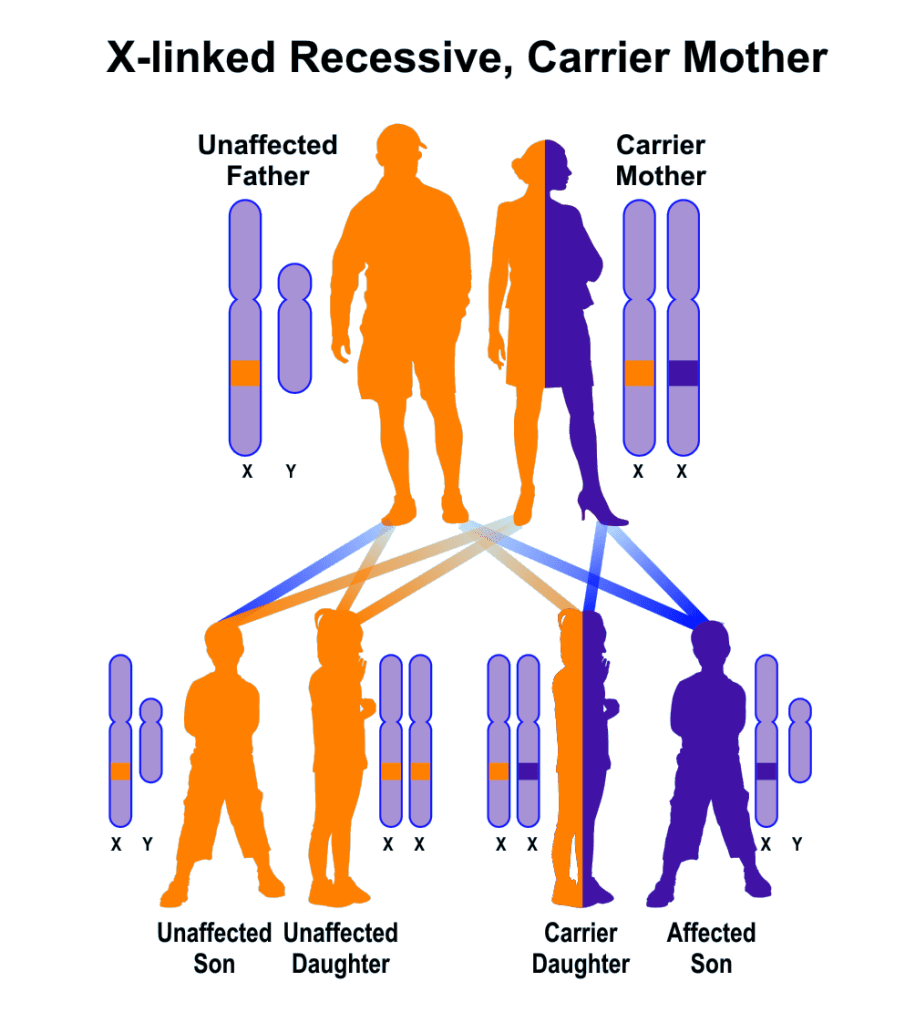
It was the genetic counselor who explained to us how Wells acquired IFAP syndrome. Males have an X and a Y chromosome, I gave Wells one of my X chromosomes and Chris gave Wells his Y (I couldn’t give Wells a Y chromosome because I don’t have one, I have two X chromosomes because I’m a female). One of my X chromosomes is normal and the other X chromosome is compromised. Because I have one good X, my symptoms of IFAP are lessened therefore, I’m a carrier of the syndrome. Unfortunately, the X that I passed onto Wells was my compromised X chromosome. He doesn’t have another X to combat the compromised X, so his symptoms of IFAP are full force. My father has all of Wells’ same symptoms. His mother, my paternal grandmother, is a carrier. Her father had these same symptoms. The genetic counselor said this is a males syndrome; they give it to their daughters who become carriers, and those daughters give the syndrome to their sons.

Millie could be a carrier for IFAP syndrome. I could have given her my compromised X but so far, she doesn’t have any IFAP symptoms. She can chose to be genetically tested before she decides to reproduce. If she is a carrier and has a boy, he would have a 50% chance of having IFAP syndrome.

When baby number three is born (we do not know gender) and if the baby is a boy, blood will be drawn while we are in the hospital to be sent to the lab to test for IFAP. At this point, I am hoping that this new baby is a girl OR a boy with my non-compromised X chromosome.

Severe cases of IFAP have noted kidney abnormalities. To make sure Wells’ kidneys developed correctly we took him to get an ultrasound. He was such a brave boy when he was laying on the table. I put my head next to his and we sang Mickey songs together. The tech ran the ultrasound on his belly and his back. She complimented Wells on how well he did and me on my singing. We received the results within the next hour. Wells’ kidneys were sonographically normal and in the normal range for renal dimension. This was a great relief.

In some cases of IFAP, mental retardation is present. With Wells’ CAS (childhood apraxia of speech) diagnosis, we were referred to a neurologist to make sure Wells’ brain was appropriately developed. When we arrived, the nurse gave Wells a sheet of emoji stickers that he stuck to the patient table in a circle and pretended to play duck-duck-goose with them – it was adorable. The neurologist was unfamiliar with IFAP and wanted to test Wells to get a baseline of his development. She asked him questions like, “touch the door, after touching the floor”. She had him stand on one leg. She asked him to point to certain colors, what his best friend’s name was (he said Mia), and to sing his favorite song (the PJ Mask theme song). She was aware of his apraxia and noted that she observed this in his speech however, everything else she tested him on was either developmentally appropriate or advanced for his age. We were thrilled.

The neurologist explained to us that 28-30% of children with IFAP develop seizures. She told us what to look out for if Wells starts to seize and that sometimes seizures don’t look like they do in the movies; he could stare off and not come out of it, one limb could rhythmically move, etc. We have a plan moving forward if he develops this part of the syndrome and until then, Wells does not need to see neurology on a regular basis.

Most recently, we went back to the ENT for the final follow up for Wells’ adenoidectomy. Unfortunately, Wells continues to have a nasal drip. After being tested by the allergist at the ENT’s request, we found that Wells has no allergies alas, his nasal drip is not caused by allergies. The doctor checked to make sure Wells hadn’t put anything up his nose (he did not). He checked his ears and throat (both of which looked great). It was determined that Wells’ drainage is IFAP related but to what extent, the ENT wasn’t sure. While he discusses the possibilities of why this is happening with the geneticist, he put Wells on a steroidal nasal spray to reduce his inflammation. The ENT believes this will be a chronic issue for Wells.

Through the Ohio Department of Health we are in the process of applying for CMH which stands for Children with Medical Handicaps. This health care program will help to offset the costs of Wells’ medical needs.

This diagnosis is beyond scary. All I want to do is help my baby and take this away for him. Unbeknownst to me, I was the one to give this to him. There is a perpetual feeling of guilt that I have to suppress as I need to focus on what Wells is going through and his needs. I will forever be his advocate as we navigate this syndrome, together.

Speech Delay

Speech Delay

A cognitive speech delay refers to the condition of children whose speech function is significantly below the expected average for their age.

Wells was such a ham at the pediatricians office for his 18 month appointment. He proudly walked onto the scale, waved at every nurse in the hallway, and peeked his head into another room to say, “hi” to the doctor. As we waited for our visit, I was given a behavior and intellect survey. I quickly became aware of what the average 18 month old could do and what my son could not. “Does your child put two words together to make a short phrase?” We clap when Wells says half of a word correctly. “Does your child say 50+ words?” Does “eee” count as a word? I looked over at Wells, sitting with his ankles crossed on the table, and my eyes begin to well.

His doctor reassured me that because he’s male and has a talkative older sister, we shouldn’t be worried. “It just hasn’t clicked for him yet.” I asked about a speech therapist however, that was not an option for Wells because he had no other signs of delayed development. She said, “He’s content; it’ll come. Model speech. Incorporate more sign language and give him choices.” I was told at his two year appointment we will reevaluate, which put a timeline on us, and that pressure was heavy.

Wells’ hearing has been checked. When he was born he didn’t pass his first hearing exam in the hospital; he had womb fluid in his ears. Before we left the hospital, Wells passed his hearing test. At eighteen months, Wells understands what we ask of him; cognitively, he is fine. Wells has great social skills; he plays with his sister and other children. Wells might not speak words yet but he communicates through pointing, body language, sign language, and grunts. Every adult is, “mama” right now (which absolutely destroys Chris because he still doesn’t say, “dada”). When Wells would call Chris, “mama” Chris would respond, “No. Say, ‘dada. Da-da’”. After doing some research, we learned saying, “no” to his vocalizations could actually hinder him from attempting to speak.

Following some advice from my best friend, Lindsey, I began following some vocal pathologists and speech therapists on social media. Watching their stories and reading their posts made me feel like we weren’t alone with Wells’ speech delay. A particular post caught my eye that read, Early Intervention; not “wait” and see, check and see. The post was about support for children 18-36 months old with cognitive delays. Our pediatrician said that insurance would not cover speech therapy until he turned two however, this program was state funded as long as the child qualified. I decided to fill out the questionnaire and I received a phone call within a week to schedule a virtual evaluation.

For the virtual evaluation, Millie got doughnuts with Mawmaw so Chris and my full attention could be on Wells. Signed into the Zoom meet was the Help Me Grow service coordinator, OT (occupational therapist), and a speech pathologist. Chris held the phone and I played on the floor with Wells with the toys that HMG recommended; blocks, Little People, books, Melissa and Doug knob puzzles, balls, etc. The therapists asked questions about his daily routine and his skills. We were all so impressed with how much Wells was showing off. He acknowledged the specialists, he stacked blocks 12 high, he identified colors and body parts, he jumped like a frog, and made animal sounds!

The specialists were using the Bell Curve to determine if he would qualify for state-funded therapy. He scored extremely high in the motor skills and comprehension categories. Once his speech score was included, it dropped his score significantly but not enough to qualify for state funded help. I was devastated. Without hesitation, I began advocating for Wells and the help that I knew he needed. I mentioned that we had taken advice from a speech therapist that I work with and that we were not seeing improvement in his speech. I reiterated the frustration we feel, especially Wells, when he can’t communicate his needs. Thankfully, the speech pathologist on the video conference heard me. She said, “My clinical opinion trumps the Bell Curve score. It is my opinion that Wells needs intervention in expressive speech and I will take him on my case load.”

The next step was to meet with HMG to compose an IFSP (Individual Family Service Plan). An IFSP is provided based on the concerns of the family and the child’s needs. The plan must include: an assessment of a child’s present levels of development, a statement of goals, support services that will be put in place to achieve those goals, date services will begin, and the identification of the service coordinator. A re-evaluation is done every 6 months. Wells’ goals were to expand his expressive vocabulary and to use family names ie. Mia, Dada, Papa etc.

We were able to schedule in-home meetings, twice a month. Wells’ speech therapist’s name is Katie and she is extremely kind. We meet around Wells’ nap time so he’s not been in the best of moods however, she lets him draw in her planner and he loves that. She listens to Wells while he plays and gives Chris and I ways to better communicate with him. Our first assignment was, “imitation”; getting Wells to copy the faces we made and then asking him to repeat a word. We also were encouraged to sing with him and let him fill in the words. Katie also told us to stop saying, “Wells say …” and since we’ve stopped putting him on the spot, he’s picked up more words. Because Wells is so active and advanced in his motor skills, Ms. Katie recommend we add repetitive words to movement like, “One, two, three, jump!” Verbal routines and elimination ie. “ready, set, go” multiple times then “ready, set” and he should fill in the blank with “go”. After a month of speech therapy, Wells seems more confident in trying new words.

Millie and Wells met a little girl while watching the penguins swim at the Newport Aquarium. Millie introduced herself right away, full name and age. The little girl introduced herself. Wells puts both hands on his chest and said, “Wells”. I got tears in my eyes; I was so proud of him. He knew what the girls were saying and without being prompted, he joined the conversation. He also has started babbling. It’s not often but it is encouraging because he is using his tongue, “dee di do do da da”. When he uses his little voice he has the sweetest smile on his face – he knows it pleases us.

Here is a running list of Wells’ said words (not all consonants are there but he attempts) :

  • Mama
  • Mawmaw
  • Gam
  • Eat
  • Couch
  • Hi
  • Bye
  • Bean
  • Corn
  • Drink
  • Wells
  • Bath
  • Mickey
  • Blue
  • Red
  • Yellow
  • Pink
  • Bluey
  • One, Two, Three, Four, Five
  • Green
  • Eyes
  • Teeth
  • Nose
  • Mouth
  • Toes
  • Read
  • Run
  • Mine
  • No
  • Beep
  • Warm
  • Cold
  • Hot
  • Home
  • Mouse
  • Up
  • Down
  • Out
  • Yeah
  • Clean
  • Swing
  • Please
  • Slide
  • Phone
  • Crying
  • Quack
  • Meow
  • Car
  • Yum
  • Cream
  • Candy
  • Ice
  • Ready

Everyone has an opinion on Wells’ delay and the resources we are giving him. I’ve heard, “Once he starts talking you won’t get him to shut up!” This comment was not helpful. When we are dealing with Wells completely melting down when he can’t communicate his needs, his verbal skills when he’s older does not help him now. “Boys are late talkers, he’s fine.” My son is more than fine. He is beautiful, healthy, and intelligent. He is getting help for a diagnosed delay. “It could be worse.” Chris and I are very blessed and we are aware that Wells’ speech delay is a mild impairment compared to other children who have more severe delays. We also know that this is our reality and we are trying our best to provide Wells with the best possible resources to be successful with speech and will continue to aide him with any other aspect of life.