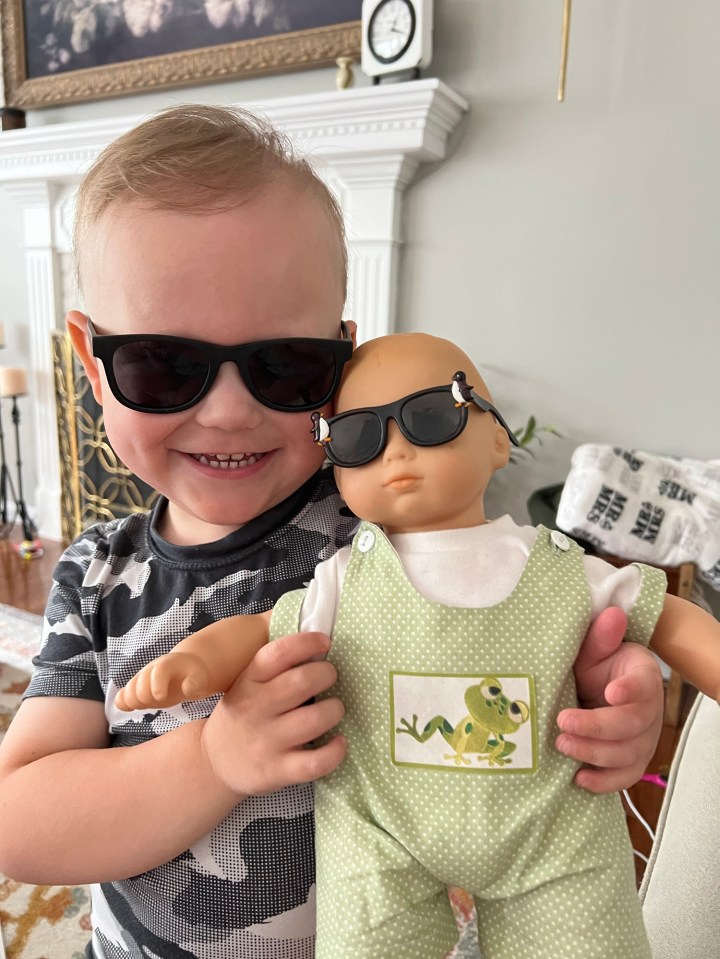
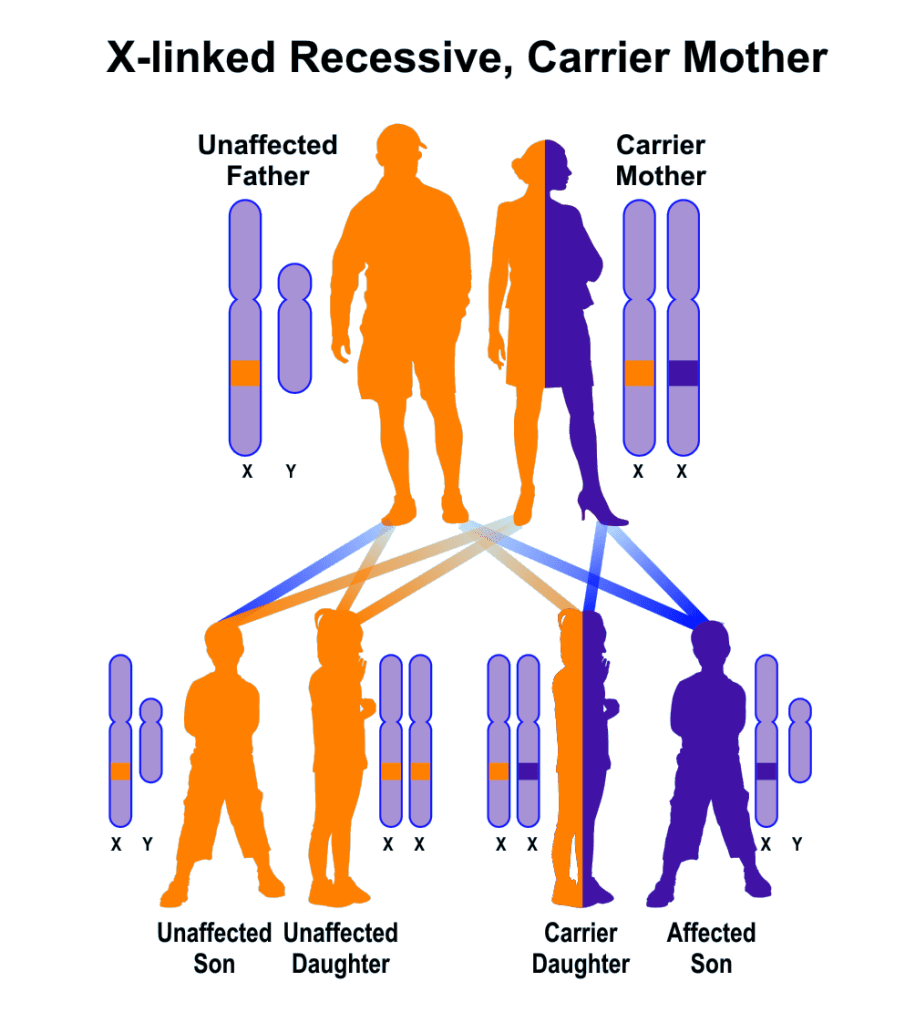
We found out about my compromised X chromosome when I was already pregnant with our third. We chose not to find out the gender and I prayed it was a girl; a girl who wasn’t a carrier. 9 months later, it’s a boy, Crosby, and he has IFAP.
Two weeks after Crosby was born, Wells had to go under anesthesia to remove his eye tubes (good for nothing) and for the corneal specialist to take a closer look at his eyes. After the procedure, the doctors informed us that there was no corneal scarring and no signs of early glaucoma – huge relief. There was eyelid inflammation and of course, the blockage of oil ducts. His dry eye is chronic; the flourometholone and erythromycin are helping with that. Overall, the ophthalmologist and corneal specialist agree that the treatment plan he’s currently on is definitely the best thing moving forward.
The summer time is the absolute worst for his dry, cracked feet. Flip-flops, chlorine, no socks – it was creating many deep cracks that sometimes bled. The Urea cream that we were prescribed (that we found cheaper on Amazon) wasn’t absorbing into his heels. Thankfully, my in-laws’ neighbor is a doctor and he was headed up to do some research at the Mayo Clinic. He offered to pull some information about IFAP for us which turned out to be incredibly helpful. He brought back a stack of papers – all related to, or resources for IFAP syndrome. I read through case studies that I hadn’t seen before. It was surreal reading about other boys with the exact condition as Wells. Three different children, from different parts of the world, were treated with a medicine called, Acitretin (10mg per day) and saw improvement in skin features. I reached out to our dermatologist right away.
The dermatologist said that Acitretin could smooth the rough texture of his skin and help with the cracking on the feet. She did not expect hair growth from the medication (all of the case studies from the Mayo Clinic said nothing helped the Alopecia). She explained that Acitretin is not a medication without side effects (skin drying out, possible growth abnormalities, high liver enzymes). There would be regular monitoring of blood work and x-rays to safely have him on the medication.
We learned that Acitretin is usually used in treating psoriasis. Women cannot take this medication because it can cause reproductive issues. We read about people who have used and currently use this medication and weighed out the pros and cons. Wells can stop taking this medicine cold-turkey if we notice any negative side effects, it’s non addictive – it’s a vitamin A derivative, and you can start at a very low dosage and still see results. Some scary cons were lack of growth (already an issue if you have IFAP), chapped (to the point of cracking) lips, it’s only offered in capsulated form, and possible abnormal blood results. After careful consideration, we decided to try Wells on the Acitretin.
Wells’ preliminary blood results came back with elevated triglycerides. The dermatologist called me and asked if we fasted before the blood draw. I was like, “Nope. He ate TimBits.” My bad. Even still, we were given the green light to start the medicine. The Acitretin only came in capsule form so we were encouraged to give it to him by opening the pill and pouring the medicine onto something with high fat intake. We decided on whipped cream. Wells began taking the Acitretin and within two days, his skin felt smoother than it had ever been. He did get a gnarly sore on the corner of his mouth because his lips were so incredibly dry from taking this medication. It hurt him to open his mouth too wide especially when he was eating. We informed the dermatologist and she recommended we try taking the medicine every other day. I noticed that the daily vitamin that we were giving him also vitamin A, 100% of his daily value. We started giving Wells the Acitretin once every three days and the balance was perfect.
Crosby has the sandpaper textured arms and legs. His cheeks aren’t as bad as Wells’ were but they’re rough, too. He has two large, bald patches on the top of his head. His eyes water when we take him outside. His nose constantly runs. Until Crosby’s feet crack to the point of discomfort, he wont see the dermatologist. It’s a waiting game to see how many side effects he’ll have of this awful syndrome.
I was let down at our annual, geneticist appointment. Last year, I requested from the doctors to find us a support group for IFAP (didn’t happen). In fact, the doctor said I was the specialist on IFAP now and I know more about the syndrome than him, the doctor (real reassuring considering I don’t know a whole lot). We were told that the type of Alopecia the boys have is called, Atrichia, a rare, recessive form of alopecia where people are born with hair that falls out and is never replaced. Wells has a patch of hair like this and most of Crosby’s head has no hair. The rosemary oil we’ve been buying and putting on their scalp does no good; the hair loss is irreversible.
Nationwide Children’s hospital hosted a Rare Disease Day on March 1st, that my mother-in-law and I attended for knowledge about participation in research studies for the boys. Organizations like NORD and A Kid Again set up booths to spread awareness of their services. The MC spoke about rare diseases being embodied by the zebra; when you hear hooves, you think horses however, sometimes hooves can mean zebras!

The keynote speaker was a doctor and patient who discovered, and named, a rare disease. They were incredibly transparent about the research/patient experience (no one wants their children to feel like lab rats). We were informed of the website clinicaltrials.gov where we’ve already found studies both active and completed about parts of IFAP. Ichthyosis is really being researched in France.
At the end of the session, the MC asked for everyone in attendance to take a group photo. By chance, the doctor who spoke stood next to me! I asked her, “What should I do if our doctors aren’t looking into research studies for us? I know more about our rare disease than the doctors do.” She explained to me that it’s the doctors who will be able to find the best clinical studies for my boys and that I should reach out to them and let them know that I am interested in research studies even if it’s done by a fellow and not a “famous” doctor. I told her that some research is being done in France for parts of IFAP syndrome to which she said, “Sounds like that could be a nice vacation. I have patients in France. Try to contact the doctor facilitating the protocol and see if they know anyone in the U.S. also doing this research.”
The breakout session we attended was about participation in research studies. It was suggested to contact the pharmaceutical company of the medication the boys are on to see if there’s research studies we can take part in. Researchmatch was another application that was mentioned to connect patients to clinical studies.

I learned that there is a Rare Disease Advisory Counsel that I might try to join when I get some free time (free time, what is that?) NCH has a program called “Connecting families” where families who are newly diagnosed can speak with families who have been through it. It would be incredibly rare for someone to have IFAP but I am definitely interested in potentially helping another family facilitate life with a rare disease. There are also rare disease sibling support groups that I could look into later for Millie.
A week after the Rare Disease event, I was informed that our family qualified for, A Kid Again. It’s a nonprofit organization that offers free, monthly events and activities for families dealing with a life-threatening condition. They handle all the expenses and details, so that families can simply enjoy themselves. I was excited that we were given this opportunity but at the same time I felt bad because my sons have poor enough health to qualify. (I gave that to them, that compromised X chromosome.) The kids don’t age out until they’re twenty so we can experience these fun adventures for a while. I know they’ll be something we all look forward to. We will go to our first outing in April!











 Mothering Millie